
Best Portland Neighborhoods for Long-Term Real Estate Investment
The best Portland neighborhoods for long-term real estate investment, ranked by 2025 RMLS sales data, are Alameda, Irvington, Beaumont-Wilshire, West Hills, and Lake Oswego. Each operates at a different price tier, but all share the structural qualities that drive durable appreciation: scarce, irreplaceable housing stock, sustained owner-occupant demand, and meaningful insulation from the supply additions that erode value in newer suburban corridors. Whether your target is a luxury estate or a mid-range buy-and-hold single-family home, these five markets define where Portland capital has consistently compounded over time.
The Urban Growth Boundary Advantage: Why Supply Scarcity Supports Values
Oregon's Urban Growth Boundary is the foundational constraint that separates the best Portland neighborhoods for long-term real estate investment from most national markets.
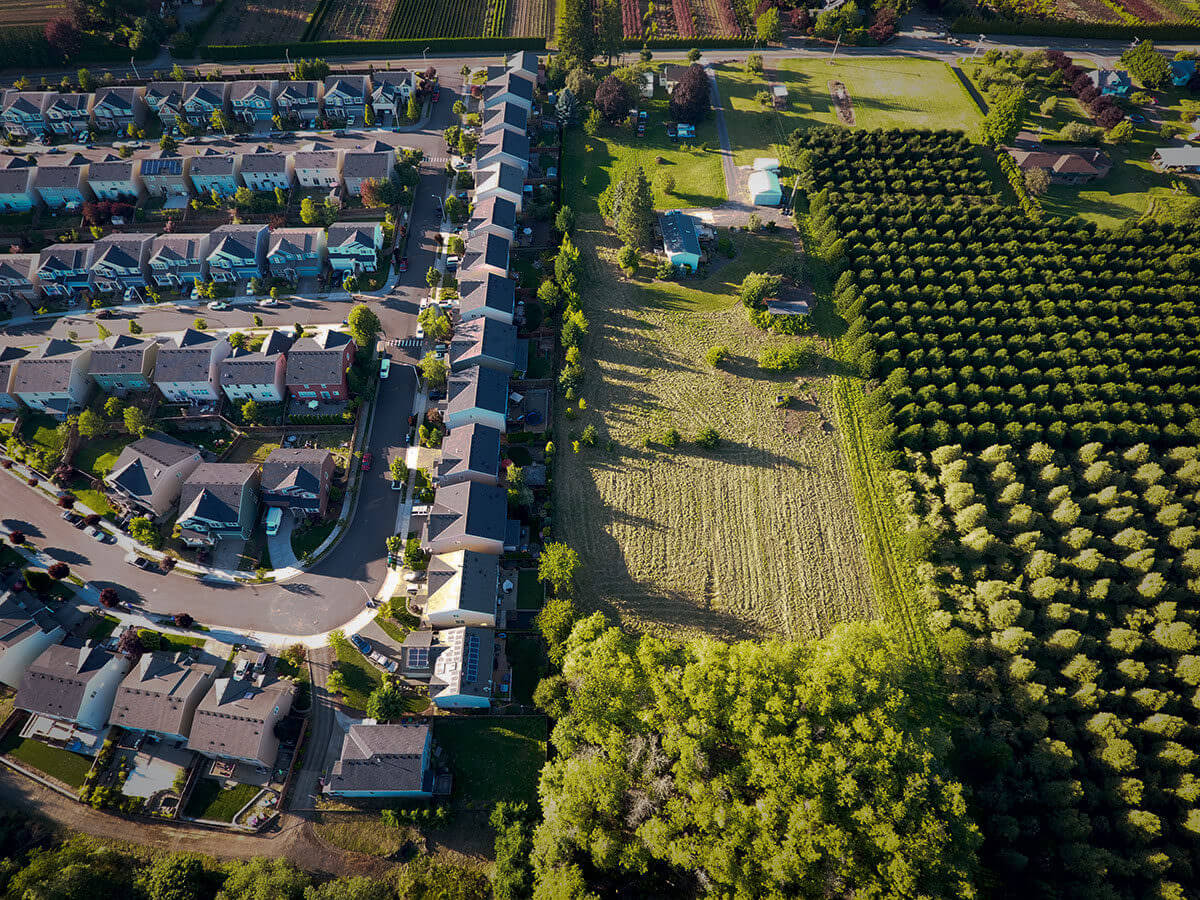
Managed by the regional government Metro and enacted under Senate Bill 100 in 1973, the boundary limits outward urban expansion, meaning the land inside fully built-out neighborhoods like Alameda or West Hills cannot be replicated at scale. New detached single-family supply inside the boundary comes almost exclusively from slow, expensive infill and redevelopment. That structural scarcity functions as a durable floor under long-term values.
Portland's citywide RMLS 2025 data, analyzed by Portland State University's Center for Spatial Analysis and Research and published in Portland Monthly (April 2026), shows a 3 percent median price gain year-over-year and 22 percent over five years across all neighborhoods. The five areas covered here consistently outpaced those figures on the five-year horizon.
Oregon's Measure 50 adds a further investor-favorable layer by capping annual assessed value growth at 3 percent, meaning long-term holders accumulate a growing gap between their tax basis and market value, an advantage that compounds meaningfully over holding periods of a decade or more.
Alameda: Luxury Appreciation in a Supply-Constrained Historic District
Alameda ranks among Portland's most compelling luxury neighborhoods for long-term real estate investment. The 2025 RMLS data shows a median sale price of $939,675, nearly double Portland's citywide median of $515,000, with a 4 percent one-year gain and a 23 percent five-year gain, outpacing the city average on both timescales.
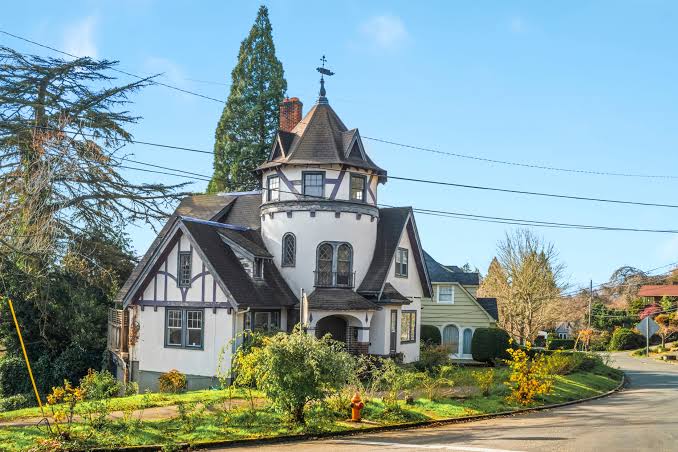
Alameda Ridge creates a topographic constraint that limits what can be built and where. With zero condo sales in 2025, an average build year of 1929, and average square footage of 2,823 square feet, the inventory consists almost entirely of pre-war detached single-family homes. Average days on market came in at 29, notably fast for this price range, and the 79 percent homeownership rate signals a stable owner-occupant base that limits speculative volatility. Demand is driven by families seeking Alameda Elementary and Grant High School attendance zones, ridge views of the Cascade Range, and walkable access to Northeast Fremont Street's retail corridor.
Entry requires meaningful capital, as the bulk of inventory prices above $800,000, and liquidity in this range is thinner than mid-market tiers. The payoff is access to one of the most structurally protected appreciation corridors in the city.
Irvington: Historic Prestige with Consistent Demand
Irvington's investment case rests on consistency over acceleration. The 2025 RMLS median was $875,000, flat year-over-year and up 11 percent over five years, with an average of just 26 days on market, the fastest absorption rate of any neighborhood in this guide.
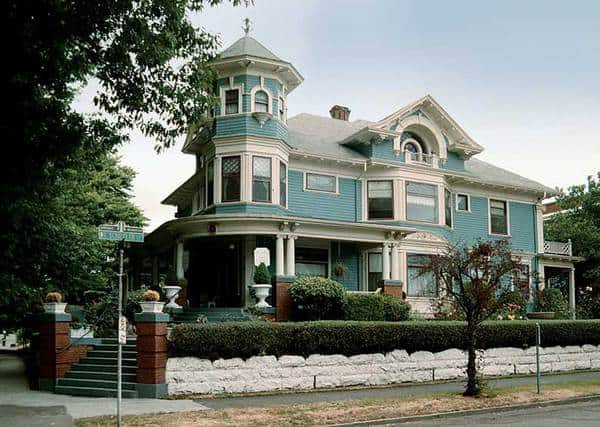
That speed matters to investors because a 26-day average for homes approaching $900,000 means correctly priced Irvington inventory does not sit. The neighborhood's complete sidewalk coverage, Walk Score of 84, and MAX light-rail proximity concentrate demand among professional households who commute downtown but want character-rich, substantial housing. Average square footage of 2,781 square feet and a 1928 average build year describe Craftsman and Colonial Revival homes that attract long-tenure owner-occupants and command upper-tier rents relative to acquisition cost when leased.
The flat 2025 performance reflects a market that fully repriced through the post-2020 run-up and is now absorbing that appreciation at stable volume. For investors with five-to-ten-year horizons, flat entry in a high-absorption neighborhood can represent a more attractive setup than entering one still in active appreciation.
Beaumont-Wilshire: Mid-Range Entry Point and Northeast Stability
Beaumont-Wilshire offers the most accessible price point in this guide, with a 2025 RMLS median of $682,500, functioning as the mid-range complement to Alameda and Irvington within the same Northeast Portland corridor. The neighborhood spans Alameda Ridge's northern slopes with a mix of Craftsman bungalows, Tudors, and Cape Cods averaging a 1962 build year, split into two micro-markets at Northeast Fremont Street.
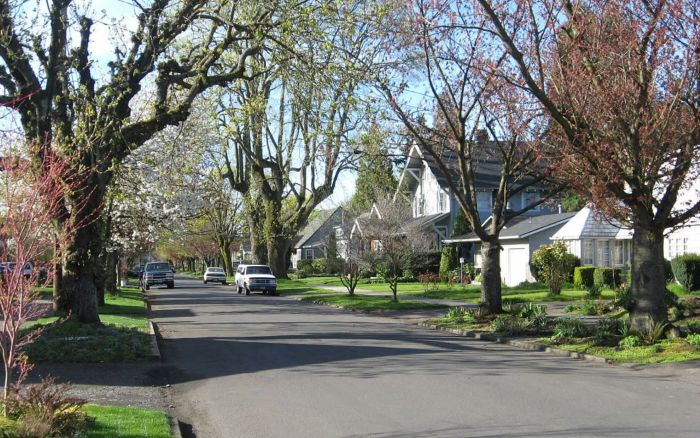
The 2025 data shows a 6 percent one-year decline and flat five-year performance, metrics that reflect rate sensitivity in this price band rather than a loss of underlying demand. The 89 percent homeownership rate, Walk Score of 78, and Bike Score of 95 all point to a fundamentally sound submarket. Beaumont-Wilshire's $600,000 to $750,000 range sits precisely where monthly payment sensitivity to elevated mortgage rates is most acute among Portland's move-up buyers.
The investment rationale functions as a cycle-timing play. An investor acquiring in the mid-$600,000s captures potential correction-floor pricing in a neighborhood with durable tenant demand anchored by Beaumont Village's commercial district and strong school access. This represents a medium-risk, medium-horizon position suited for investors who want Northeast Portland exposure at a lower capital threshold than Alameda or Irvington.
West Hills: Privacy, Views, and Enduring Prestige
The West Hills, encompassing Southwest Hills, Arlington Heights, Hillside, Sylvan-Highlands, and adjacent sub-neighborhoods on the ridge above downtown, represent Portland's most heterogeneous luxury submarket by price. The 2025 RMLS data captures the range: Southwest Hills posted a median of $1,050,000, up 5 percent year-over-year and 24 percent over five years, with an average of 97 days on market.
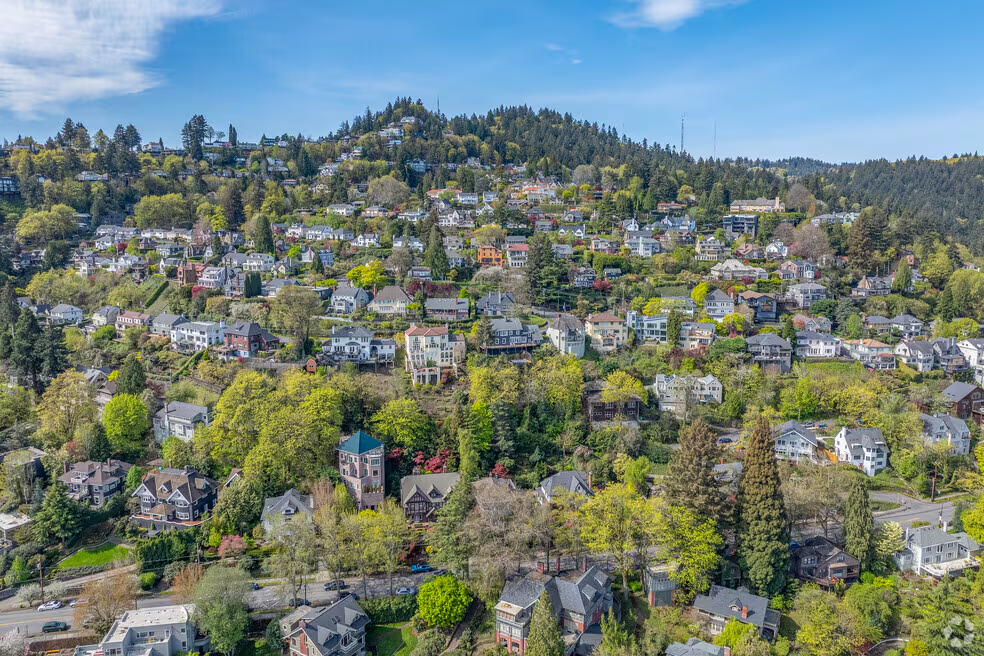
Arlington Heights came in at $1,250,000, up 9 percent year-over-year and a striking 42 percent over five years, the strongest five-year appreciation rate of any neighborhood in this guide. That performance reflects genuine scarcity: the neighborhood abuts Washington Park, its view corridors and lot sizes are effectively non-replicable, and only 17 homes transacted in 2025. Low transaction volume creates year-to-year price volatility, but the five-year trend remains clear.
The investment consideration specific to West Hills is liquidity. Southwest Hills averaged 97 days on market in 2025, nearly double the Portland citywide median, because luxury buyers above $1 million are deliberate and rate-sensitive on timing. Investors entering here should underwrite a longer exit horizon rather than the shorter assumptions that apply to mid-market positions.
Lake Oswego: The Metro's Benchmark Luxury Investment Market
Lake Oswego stands as the Portland metro area's benchmark luxury investment market, anchored by a top-ranked school district, deeded lake-access rights tied to property ownership, and one of the most structurally constrained supply environments in the region. The city sits just south of Portland in Clackamas County.
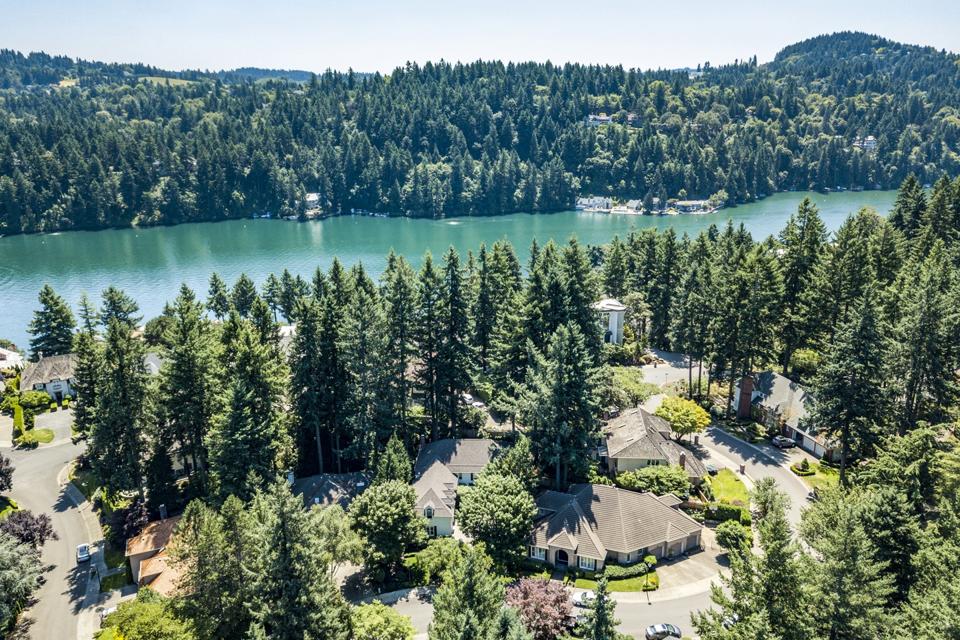
Full-year 2025 RMLS data across 489 closed transactions produced a median sold price of $1,100,000 for single-family detached homes, with the central Lake Oswego and First Addition corridor carrying a median of approximately $1,300,000 at roughly $425 per square foot (RMLS 2025 data via cities.livinginoregon.net, 2026).
Three structural factors make Lake Oswego durably defensible for long-term real estate investment:
-
School District Standing: The Lake Oswego School District's top-tier ranking generates consistent demand from families who will pay a meaningful premium to remain in-zone across rate cycles.
-
Lake Access Scarcity: Oswego Lake, spanning approximately 405 acres, creates lake-access scarcity that cannot be replicated elsewhere in the metro. Deeded waterfront access remains exclusively tied to Lake Oswego Corporation member property ownership, which requires paying annual assessments to maintain the lake's infrastructure. While a 2025 Clackamas County Circuit Court ruling established limited public entry at Lower Millennium Plaza Park (with the Lake Oswego Corporation's appeal filed with the Oregon Court of Appeals in August 2026 remaining pending), the deeded lake-access rights framework that ties full recreational use to property ownership continues to drive the pricing premium on lakefront and lake-adjacent inventory.
-
Tax Protection: Measure 50's 3 percent cap on annual assessed value growth compounds the advantage for long-term holders year by year.
Market dynamics in 2025 gave buyers negotiation room, with a sale-to-list ratio of 98.2 percent and average days on market running 66 days citywide. The most accessible entry within the Lake Oswego School District zone sits in Lake Grove and Mountain Park in the $700,000 to $900,000 range, representing a viable mid-range path into one of the metro's most supply-constrained school districts.
Matching Neighborhood to Investment Strategy
The right neighborhood depends on three variables: capital available, target holding period, and yield expectations. Each submarket in this guide maps to a different investor profile.
| Neighborhood | 2025 Median | 5-Yr Appreciation | Avg Days on Market | Strategy Fit |
|---|---|---|---|---|
| Arlington Heights | $1,250,000 | +42% | ~38 | Luxury long-hold, strongest appreciation |
| Lake Oswego | $1,100,000 | ~38%† | 66 | Luxury long-hold, school & lake-access premium |
| SW Hills | $1,050,000+ | +24% | 97 | Luxury long-hold, lower near-term liquidity |
| Alameda | $939,675 | +23% | 29 | Luxury long-hold, fastest absorption |
| Irvington | $875,000 | +11% | 26 | Stable long-hold, compressed entry |
| Beaumont-Wilshire | $682,500 | 0% | 36 | Mid-range, rate-cycle timing play |
*2025 RMLS data: Portland Monthly / PSU Center for Spatial Analysis and Research (April 2026). Lake Oswego RMLS data: cities.livinginoregon.net (2026). Lake Oswego five-year appreciation is a directional estimate from a third-party model covering Q3 2015 to Q3 2025, a ten-year window that differs from the 2020 to 2025 RMLS-based five-year period used for all other neighborhoods in this table.
Investors prioritizing liquidity should weight Alameda and Irvington, where absorption is fastest relative to price tier. Those with longer horizons and higher capital should concentrate on Arlington Heights and Lake Oswego, where structural scarcity is strongest. Beaumont-Wilshire and the Lake Grove or Mountain Park corridors in Lake Oswego represent accessible mid-range entry points.
Across all five neighborhoods, the investment thesis rests on the same foundation: Urban Growth Boundary constrained supply meeting sustained owner-occupant demand in fully built-out submarkets. For a detailed breakdown of local housing options, school metrics, and pricing across entry tiers, explore our First-Time Buyer Guide to Portland Neighborhoods 2026.
Frequently Asked Questions
Which Portland neighborhood for long-term real estate investment has delivered the strongest appreciation?
Among the neighborhoods in this guide, Arlington Heights has delivered the strongest five-year appreciation at 42 percent through 2025, based on RMLS data published in Portland Monthly (April 2026). Alameda and Southwest Hills follow at 23 percent and 24 percent respectively, both outpacing Portland's citywide five-year gain of 22 percent.
Is Lake Oswego a good long-term real estate investment?
Lake Oswego ranks among the most structurally defensible long-term markets in the Portland metro area. The school district premium, deeded lake-access scarcity, and Measure 50 tax framework all reward patient capital. It functions primarily as an appreciation and capital-preservation play rather than a cash-flow market.
What makes Portland's established neighborhoods different from newer suburban developments for investment purposes?
Oregon's Urban Growth Boundary restricts outward urban expansion, so neighborhoods like Alameda, Irvington, and West Hills cannot be replicated by new construction at meaningful scale. Infill within fully built-out areas remains slow and expensive, producing far less new supply than comparable greenfield suburban corridors in other markets. That structural scarcity, combined with deep owner-occupant demand, supports values durably across rate and economic cycles.
What is the most accessible entry point for long-term investment among these neighborhoods?
Beaumont-Wilshire offers the lowest 2025 RMLS median at $682,500, followed by Irvington at $875,000. Within Lake Oswego, the Lake Grove and Mountain Park corridors in the 97035 ZIP code provide entry in the $700,000 to $900,000 range while remaining within the Lake Oswego School District attendance zone.
How does Oregon's Measure 50 affect long-term real estate investment returns?
Measure 50 caps annual growth in assessed value at 3 percent, regardless of actual market appreciation. For long-term holders, this creates an expanding gap between assessed value and market value, reducing the effective annual tax burden relative to the asset's appreciation trajectory over time.
Identifying the best Portland neighborhoods for long-term real estate investment requires balancing micro-market data with practical ground-level context. Whether you are analyzing portfolio opportunities or keeping an eye on local appreciation trends, reviewing current Portland housing data and properties can help bring these submarket dynamics into focus.
Recent Posts




GET MORE INFORMATION

Suzanne Clark Cambray
Your Trusted Advisor, Licensed Principal Broker in OR & NY License ID: 200608182