
Renting vs Buying a property in Portland When You're Relocating
If you're moving to Portland and trying to decide whether to rent or buy, the short answer is: Rent first, unless you already know the city and are confident in your timeline.
Portland's neighborhoods vary dramatically in character and price, and rushing into a purchase before you've found your footing is one of the most common, and costly, mistakes relocators make.
That said, the math is genuinely worth understanding before you arrive.
What Renting Looks Like in Portland Right Now
Renting gives you breathing room. It lets you test neighborhoods, commute routes, and lifestyle before committing to a zip code for the long term.
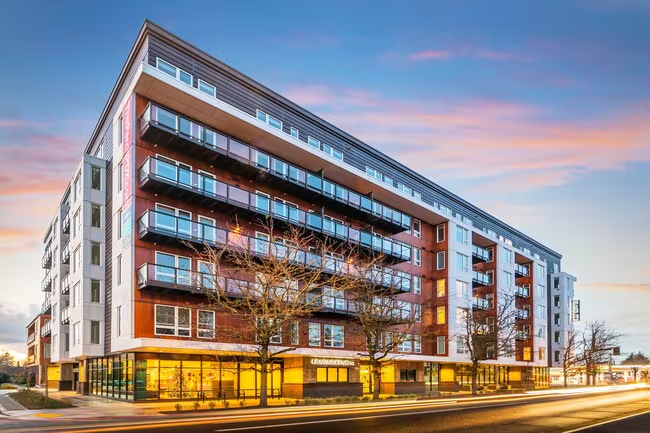
In terms of cost, Portland's rental market has stayed relatively stable over the past year. Across the city, apartment rents generally range from the low-to-mid $1,600s for a one-bedroom to the mid-$1,900s for a two-bedroom, depending on the neighborhood and property type, based on aggregated rental listing data (twelve months ending August 2026). Walkable, established areas tend to command a premium. You can browse current rental listings in Portland to get a sense of what's available in specific neighborhoods.
|
"For clients relocating with a dog, I usually point them toward whichever off-leash area is closest to the neighborhoods we're touring. It tells you a lot about daily life in a place faster than a drive-by ever could." Suzanne Clark Cambray |
Oregon also offers meaningful protections if you're renting. Since 2019, Oregon has had a statewide rent stabilization law (Senate Bill 608) that caps how much a landlord can raise your rent in any 12-month period, under Oregon Revised Statutes Chapter 90. For 2026, the key provisions are:
- Rent cap: 9.5% maximum increase for most rental housing more than 15 years old, per the Oregon Department of Administrative Services (press release, October 1, 2025)
- Notice requirement: 90 days' written notice before any increase takes effect on a month-to-month tenancy
- New construction exemption: Buildings with a certificate of occupancy issued within the last 15 years are not subject to the cap
What Buying Looks Like in Portland's Established Neighborhoods
Portland's purchase market is more varied than most relocators expect. The citywide median home sale price in 2025 was $515,000 in April 13, 2026, which analyzed 2025 data from the Regional Multiple Listing Service with Portland State University's Center for Spatial Analysis and Research. But the neighborhoods that tend to appeal most to relocators skew well above that figure.
| Neighborhood | 2025 Median Sale Price | Avg. Days on Market |
|---|---|---|
| Alameda | $939,675 | 29 |
| Irvington | $875,000 | 26 |
| Beaumont-Wilshire | $682,500 | 36 |
Source: PSU's Center for Spatial Analysis and Research, April 2026.
Alameda and Irvington, both pushing toward or above $900,000, sit firmly in Portland's luxury residential market.
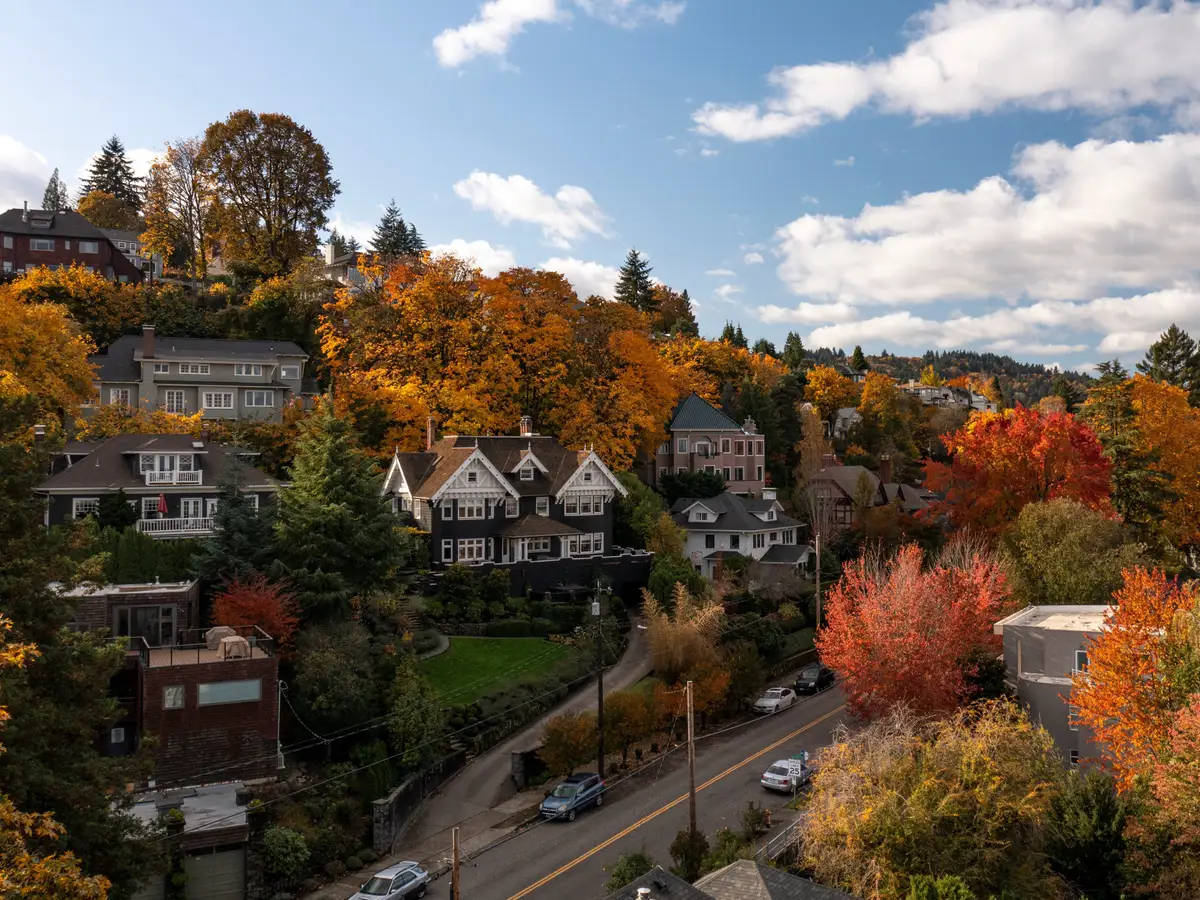
Buying in either neighborhood builds equity over time as you pay down your loan and values rise, but it also means meaningful upfront costs, ongoing maintenance, and less flexibility if your plans change.
The affordability calculator is a useful starting point for running the numbers before you commit.
The Real Question: How Long Are You Staying?
For anyone relocating to Portland, if you're staying fewer than three to five years, renting almost always makes more financial sense. The transaction costs of buying and selling within a short window can easily outpace any equity you'd build. If you're committed to Portland for five years or more, buying in an established neighborhood often makes sense, both financially and in terms of putting down real roots.
So, Which Is Right for You?
For most people arriving in Portland from out of state, renting for the first year is the lower-risk starting point. Many clients of Suzanne Clark Cambray works with, choose to rent for six months to a year, get to know the neighborhoods they're drawn to, and then buy with confidence.
You can reach out at +1(503) 420-7758 or through Suzanne Clark Cambray contact page for more information.
The local market snapshot is also a useful reference point for tracking how conditions shift while you're settling in or browsing the are you're eyeing.
FAQ
Is it cheaper to rent or buy in Portland right now?
Month to month, renting typically costs less than carrying a mortgage at current price levels, particularly in Portland's more established neighborhoods. Buying tends to make stronger financial sense once you plan to stay for five years or more and factor in equity growth over time.
Does Oregon have rent control?
Yes. Oregon was the first state in the country to pass a statewide rent stabilization law (Senate Bill 608, 2019). For 2026, the Oregon Department of Administrative Services set the maximum allowable rent increase at 9.5% for most rental housing more than 15 years old (October 2025). Landlords must give 90 days' written notice before raising rent on a month-to-month tenancy.
What neighborhoods in Portland are popular with relocators?
Established northeast Portland neighborhoods like Irvington, Alameda, and Beaumont-Wilshire are consistently popular with relocators, particularly those looking for walkable streets, older craftsman homes, and a strong sense of community. Those drawn to larger lots or more suburban settings often look at Lake Oswego or the West Hills.
Each area carries a different price point, so understanding the trade-offs before committing is worth the time. The neighborhood guides and relocation guides go into more depth on each area and what to expect.
Should I buy a home before I've fully settled in Portland?
In most cases, no, especially if you're still learning the city. Renting for the first year gives you a much clearer picture of where you actually want to live, rather than where you think you want to live based on a few visits.
Recent Posts






GET MORE INFORMATION

Suzanne Clark Cambray
Your Trusted Advisor, Licensed Principal Broker in OR & NY License ID: 200608182